
Blog

PSYCHOLOGICAL PREPARATION: REFLECT ON ATTITUDES & EXPECTATIONS Important to treat toilet awareness as a process rather than an immediate outcome. If we are process driven, it eliminates the need to use manipulation, rewards, shame, or excessive pressure. We call it toilet “awareness” because we’re supporting a process of awareness in children which leads to natural, innate independence. Understanding the Child Are they ready? Control of movement: Can they sit? Stand? Hide when they go in their diaper? Communicate that they need a change? Take off their diaper? Participate in dressing? Crisis of Self-Affirmation (Oppositional crisis): 18 mos to 3 yrs (says “No”, separate being) What is their “normal” with elimination? Disposable? Expect resistance with creating a new normal. What are the Goals? First goal: Normalizing the toilet Talk about it Use toileting language Second goal: Internalizing a new habit Creating & supporting the internalization of new routines and associations with toileting (i.e. when I’m wet, it’s time to sit on the toilet and put on dry underwear). Consistency Language Use language that builds children’s self-confidence. Avoid shaming. Use affirmative language and refrain from negative comments about their elimination (i.e. “Peew! You’re stinky!”). Avoid saying “accident” which has negative connotations. Use factual language such as, “you are wet”, “you have a bowel movement”, “your poop goes in the toilet and then we flush it down”. Avoid praise (reality-based experiences, nurture innate motivation vs. external). Celebrate successes to yourself in private. Preparation Child sized & at child’s level A simple potty chair that’s easy to clean and/or a toilet seat w/ step stool Hamper or container for soiled clothes Stool or a chair for dressing and undressing Storage for clean/extra clothes (basket) Toilet paper/wipes Stairs/stool for the sink Clothing for Independence What do we mean by “independence”? Clothing that supports success because that builds confidence in children! Clothing that is easy to take on/off for small hands Lots of cloth underwear! Cloth gives an immediate feeling of elimination Keep pants-less if possible because it offers more success when there are fewer items of clothing to take off before sitting on the toilet Easy to pull-up pants Avoid tight leggings, drawstrings, buttons, and zippers Shoes with velcro On the go: Pidd le pad (carseat) Underwear Covers TIPS FROM MONTESSORI GUIDES Prepare the environment with your child and name the items (encourages normalization and order). Get into a routine that does things in the same order. (Sound like a broken record? You’re doing it right!) Model or have other children model using the toilet. Check yourself! Your frustration will almost certainly be met with more resistance from your child Relax and your child will too Use intentional language. (Avoid praise & shame. Use affirmative and matter-of-fact language.) Remember that this is a process and adjust expectations. Don’t get too attached to the ultimate outcome. Wait until they are finished with a task to offer the toilet. Less likely to go if they’re interrupted. Don’t ask permission. State clear and consistent expectations (“It’s time to sit on the toilet”). Use “When” and “Then” statements Eliminate words as you repeat statements (“Sit. Toilet.”; simplified language = easier to process). Give Two Choices (supports oppositional crisis, gives toddlers control) Never force a child to use the toilet. Tantrums are not the right time to state expectations. If a tantrum has erupted, it has shifted into calming their bodies.
Guiding Principles
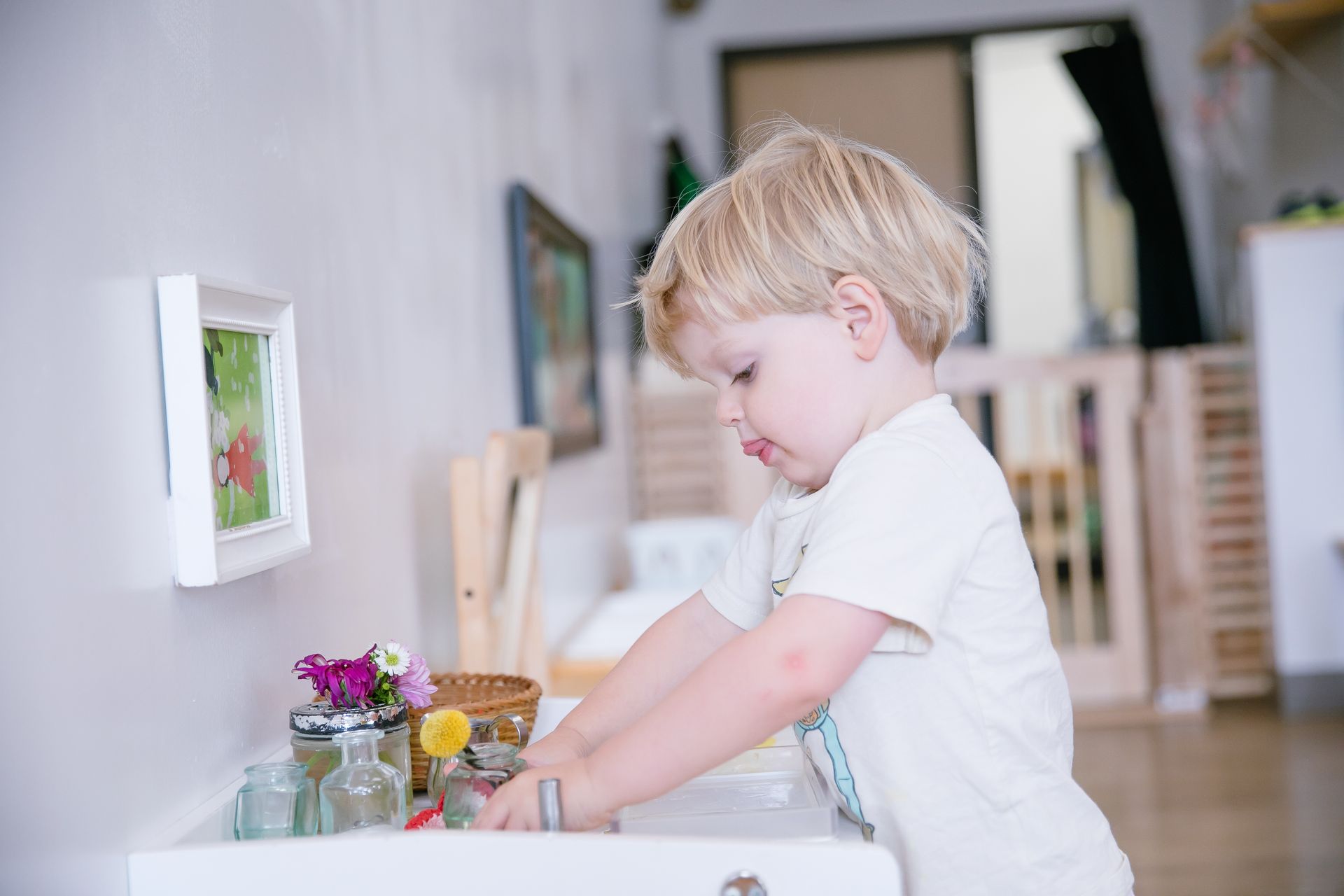
HOW TO USE LANGUAGE AT HOME Using Clear and Consistent Language: Use complete sentences and words. Avoid baby talk! Toddlers learn to talk by repeating what they hear. So make sure you’re saying “little” not “widdle” like your toddler! Enunciating Slowly: Speak slowly but naturally so the child can process it. Being at Child’s Eye Level: This helps the child see your mouth move while speaking. Engaging in Conversation: The average child spends 3-5 minutes per week in conversation, while the rest is directive language. Avoid Correcting: We do not correct mispronunciations. Instead, we repeat the correct pronunciation so that they can hear it again. Engaging in a Dance of Communication: We give the child an opportunity to respond when we communicate with them. This can be in the form of repeating back what they are saying (especially babies). With babies, we can repeat their own words back to them until they can speak words (then we use words). Creating a Relationship and Desire to Speak: We create a loving relationship with the child by accepting their interests, dislikes, and choices. It is accepting the person that they are. This loving relationship creates the desire to speak. WHEN TO USE LANGUAGE When your toddler is helping to prepare food, give directions ("Please pass the carrot to me.") and use sequencing words (e.g., first, then, next, finally), name the ingredients and cooking utensils you're using and describe them using your senses, and use cooking verbs. Chat about what’s happening during transitions in your routine. “Look at the clear, blue sky today. The sun is so bright. Let’s put on our hats and sunscreen before we go out”. At the grocery store, name the items as you put them into your cart and describe them or talk about how you're going to use the ingredient. “This avocado is still green and firm. We will need to let it ripen on the kitchen counter before we can use to to make guacamole.” When you're helping your toddler learn new self-care skills such as toileting and getting dressed, talk through what to do or how things work. When you need to set a limit on your toddler's behavior, explain why instead of just saying "no". DESCRIPTIVE LANGUAGE Don’t “Dumb Down “ language for children. Even if they don't understand it, they are absorbing it for later use. Children learn a language by being surrounded by it. Use adjectives to describe things. “Blue ball, Bright red car, Fast loud train” Adjectives and Adverbs add detail to descriptions that builds vocabulary. Children will start to speak using only nouns, but they are taking in all language. Highly descriptive language helps children to learn to differentiate between similar objects, and eventually, similar, but different, ideas. CHOICES Making choices develops the will. We give children the freedom to choose to help them learn to make decisions. Giving them choices helps build their independence. Children need the opportunity to practice making choices. In the Nido and Toddler Communities, we offer two choices, as that is all they can manage at this age. Experience the consequences that may come with the choice they make. There will be times when they do not have a choice, that is okay. Offer choices when you are able. CHOOSING BOOKS Real Life/Objects vs. Fantasy (i.e. Shopping, animals, vehicles, seasons ant etc.) Select books with beautiful illustrations and show them how carefully we hold them as if they were works of art. Always look for rich language and avoid baby talks. A-lot of details in illustration; new discoveries to discuss every time you read.
Observation: Why its Important
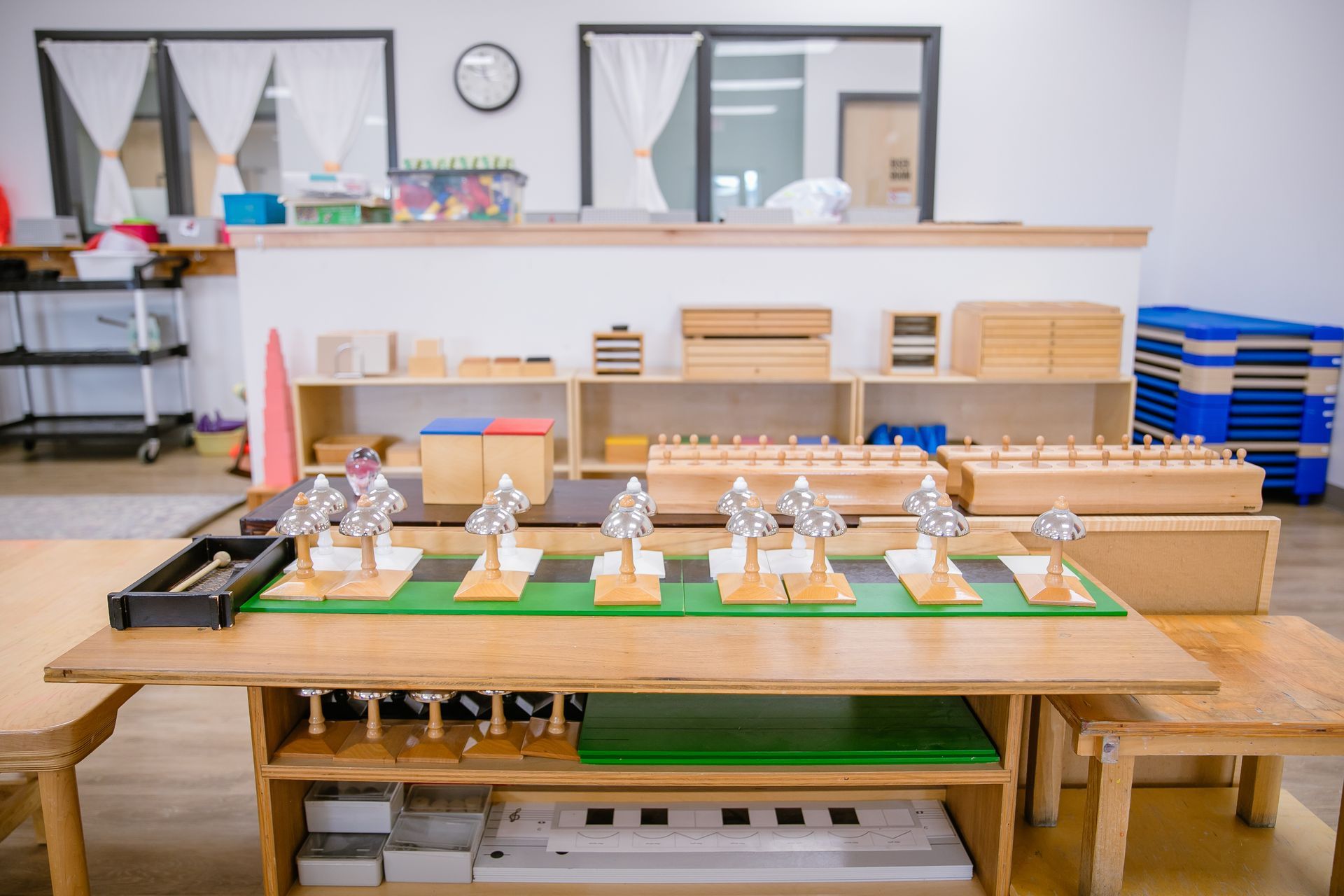
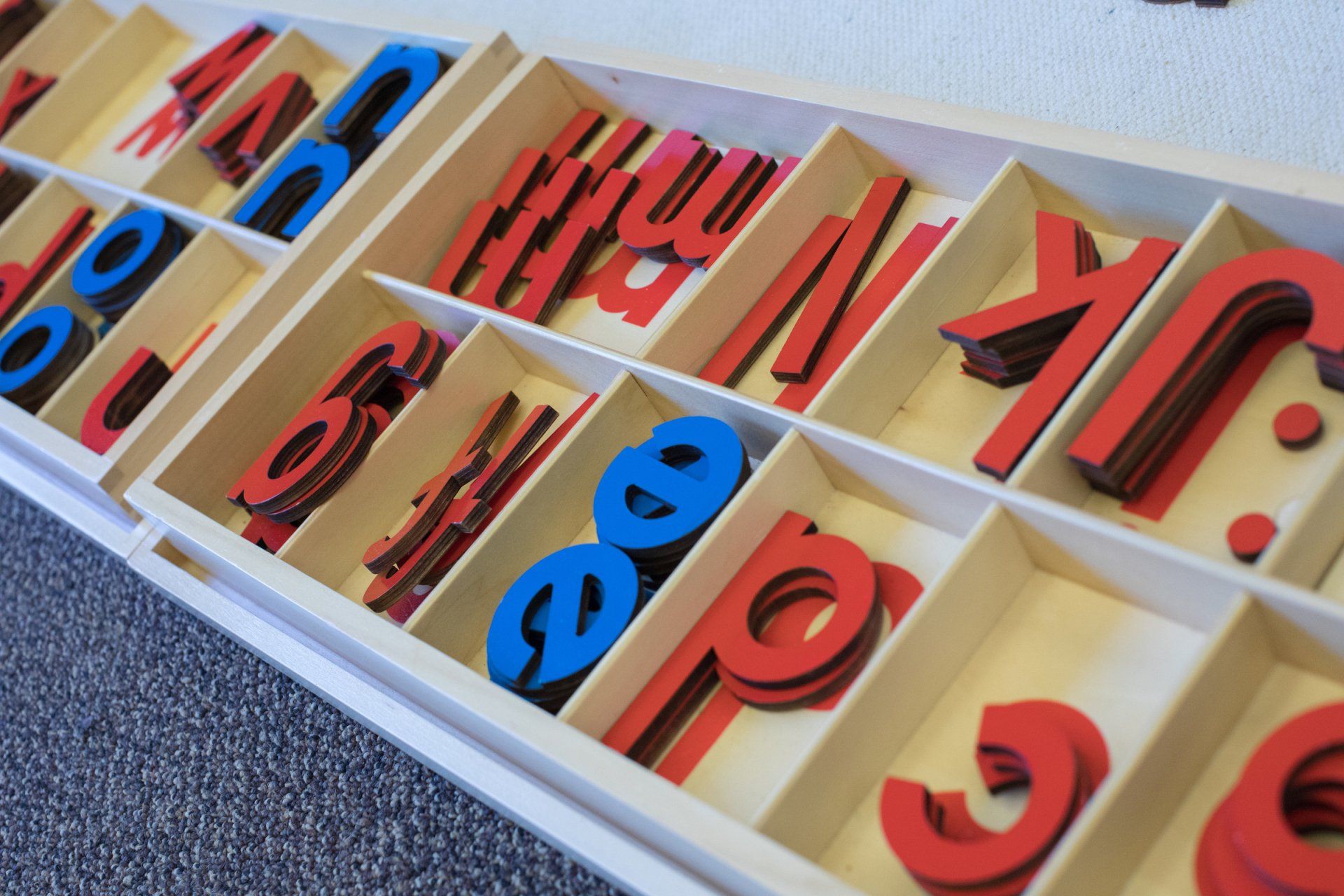
Practical Life Exercises of Practical Life are ordinary simple tasks to help a child learn how to care for oneself, the environment, and others. Adults have been conditioned to focus on the product or result. Yet, young children of the first plane live in the present and are fulfilled by the process rather than the product. Benefits of Exercises of Practical Life Develops functional independence Improves coordination of movement Develops the will And builds concentration Adaptation and Orientation: It helps the child pursue a social life where they come to participate and lead Areas of Practical Life Preliminary Exercises Care of Self Care of Environment Grace and Courtesy Control of movement Characteristics of the Materials: Child size Psychologically appropriate Well maintained Attractive Complete Similar but can tell the difference by color coding Culturally specific Organized simple to complex Full cycle of activity Serves as a direct preparation for the next work Sensorial The training of the senses is the matter of the greatest importance in education. There is no way to understand the world unless we can detect it from our senses. It is the brain’s real source of food. “If the food is rich, that is the food it has. If it is scarce, then that is the only form of nourishment it has.” It is stronger and weaker depending on what is available in the environment. Sensorial Exercises help neuro-connections in the brain become stronger. It helps the child become conscious of the physical property of the world such as taste, smell, texture, color. Aim: Classify and organize their sensory perceptions Refine his powers of discrimination Build intellect Develop Abstraction Assist in the powers of accurate memory Develop operational understanding of the world Creation of life long skills (order, exactness, and precision) Develops aesthetic sense and artistic creativity (prepares for the mathematical mind) Sensitive period for sensorial refinement only happens from birth to 6 years. Once the child has had lot of opportunities to explore EPL & Sensorial, only then can we give them the name and language associated with it. Language Spoken Language: Give language so children can be confident in expressing themselves. The freedom to explore allows them to gain ideas which expand their intellect. Adults act as role models and children absorb everything so we must use precise language. Activities: cultural folders, book reading, reading poems, storytelling Written Language: By identifying the symbol and sound, the child may discover the ability to read and write (explosion into writing). We teach writing before reading because reading is more complex Meanwhile, preparation of the hand for mechanical writing is important. The child will explode into writing leading into total reading once they are able to recognize symbols and sounds. Activities: phonetic reading, then phonograms and puzzle words, reading classification, function of words activities, reading analysis, and word study. Total Reading: Is when the child understands what he/she reads, and also appreciates: the style of writing the author’s feelings and emotions and the entire message the authors is trying to convey. Math EPL, Sensorial, and Language activities are indirect preparation for structure and patterns of Math. 2 challenges we see in this age group: Children may not understand quantity as a concept yet. For this reason, children probably won’t understand what number means or that it represents a grouping of individual units to form a whole. Working with large numbers can be hard because children concretely only have 10 fingers to count with. The bead cabinet was developed to help the child work with large quantities in a physically and psychologically understandable manner. Four tendencies that guide the mathematical mind: Order Exactness Abstraction calculation Math Materials: Numbers 1-10: number rods, spindle boxes, cards and counters Decimal System: golden beads, stamp game, dot game, word problems Counting: teen boards, ten boards, long chain and short chains, and bead cabinet Memorizing the four operations Passage to Abstraction Fractions We cannot teach the child the concept of abstraction but allow them the experiences and opportunities to understand and perceive it through their own natural process Movement All children are working to refine their movement. Examples: pouring water activity helps child work on coordination of movement in their hands to avoid over pouring, under pouring, and master exactness. Walking on the line is difficult to do at first but through repetition, the child may even be able to balance objects on their head while walking on the line. Normalization “Normalization, it is the most important single result of our whole work.” -Maria Montessori Characteristics: Love Work Deep Concentration Obedient Independent Ability to judge and reason Connected to reality Learns to be delicate Desire to know, love, and serve Love silence Inner discipline Spiritual strive towards perfection Finds Joy Human need and Tendencies Natural urge/impulse which lead without conscious design to certain actions to satisfy the human’s physical and spiritual needs. Allow the child to understand the concept of how to do things for themselves. The physical needs for food, clothing, shelter, defense, and transportation must satisfactorily be met to thrive and survive. The spiritual needs for love, compassion, religion, and community must be met to thrive and survive. Exploration, Orientation, Order, Communication, To know/To Reason, Abstraction, Imagination, Mathematical Mind, Work, Repetition, Exactness, Activity, Manipulation, & Self-Perfection. Independence Help the child help themselves. As the child is given opportunities to exercise independence, they gain awareness of what they can do for themselves, how their decisions affect others, and what they can now for themselves, they can also do for others. Infants explore and orient themselves to their environment. Toddlers can begin purposeful work. A child who feels capable and self confident in the world develops independence. Children’s House has the freedom choose, move, repeat. They become normalized, demonstrating love of work, concentration, self discipline, sociability, and a developed will. Social Development Education as a means for social change… The child’s contribution to the world is through social development and social cohesion. Social Development starts at birth in the home. In the children’s house, we provide individual presentations so that they can work on constructing themselves. Small group work is introduced later around age 5-6 because they have a need to associate themselves with others. The quality of social cohesion depends on prepared adult and prepared environment. It is the society of little children who are guided by the magical powers of nature. We must value and treasure it, because neither the character nor the social sentiment can be given by teachers. They are the products of life.” (Montessori, The Absorbent Mind pg 234) Freedom and Discipline Misconception: Discipline is a form of punishment and rewards Discipline is cultivated within the child and developed by the child when he/she freely and actively perfects themselves. Discipline is an act of creation not an act of restriction. Necessary Conditions to Grant Freedom Provide mental and physical work suited to attributes and capabilities. Be rooted in Knowledge. All members of the community needs to be involved. Consistency in providing order. Have a control of error. Independence granted in a way that is constructive. Choice/Repetition, if the child chooses, they will strengthen their freedom/will. Basic Guidelines: care for self, others, and environment. The Four Plans of Development The first 3 years is to construct. The next 3 years is to refine. Maturity period from ages 18-24 finalizes development and norming of the human species: finality Causality is based on the concept that the more teachers and subjects taught in a traditional school setting is a result of who the child will become.
Many public school systems offer kindergarten, and many parents are curious about this transitional year. Why should your child stay in Montessori for the kindergarten year? Learning for Mastery Montessori schools are intentionally structured utilizing a three-year cycle. There are many great benefits to this, but one of them is to provide third year students with opportunities that they will not have in other environments. Having spent the previous two years learning a multitude of skills in their classroom, the third year is about mastery. The Montessori curriculum is a series of carefully developed lessons and materials that are meant to cycle back to a culminating experience during the final year. All that time spent grasping knobbed cylinders, tracing metal insets, and practicing sandpaper letter formation? The kindergartner uses all that knowledge as they begin to write with paper and pencil. The years of early mathematical preparation? Now they get to use the golden beads (or perhaps the stamp game material) to learn to add and subtract numbers into the thousands (yes, as kindergartners!). Montessori’s early focus on teaching children sounds in lieu of letter names leads many children to begin reading by the time they are in kindergarten. Children as Independent Leaders Not only do guides observe children mastering these skills independently, but the children have the chance to teach to others. Educators across many settings will agree that once the student becomes the teacher, we can surmise that true mastery has been attained. So while your kindergarten child is teaching younger children how to do something, they are showing us just how well they know how to do it. Not only that - they are gaining confidence in a truly authentic way. No one needs to tell the child how well they are doing because they feel it themselves. When children teach children, it’s not just about knowledge being shared, but also about cultivating world citizens. Teaching each other is an act of kindness, and a way for children to practice helping others around them. Fueling the Spark In Montessori classrooms one of our greatest tasks is to keep the fire burning inside children’s minds. We structure our work so that children may follow their passions and learn deeply about things that matter to them. We see each child as an individual and think one-size-fits-all educational approaches tend to extinguish the joy of learning. Instead of drilling facts into children, we place materials before them so that they may discover the truths of the world themselves. Rather than asking them all to do the same thing at the same time, we value their choices and trust their educational process. It is the guide’s job to keep them on track, but they offer children the freedom that lets them deeply explore the learning that calls to their souls. Five Key Differences Between Montessori and Conventional Schooling
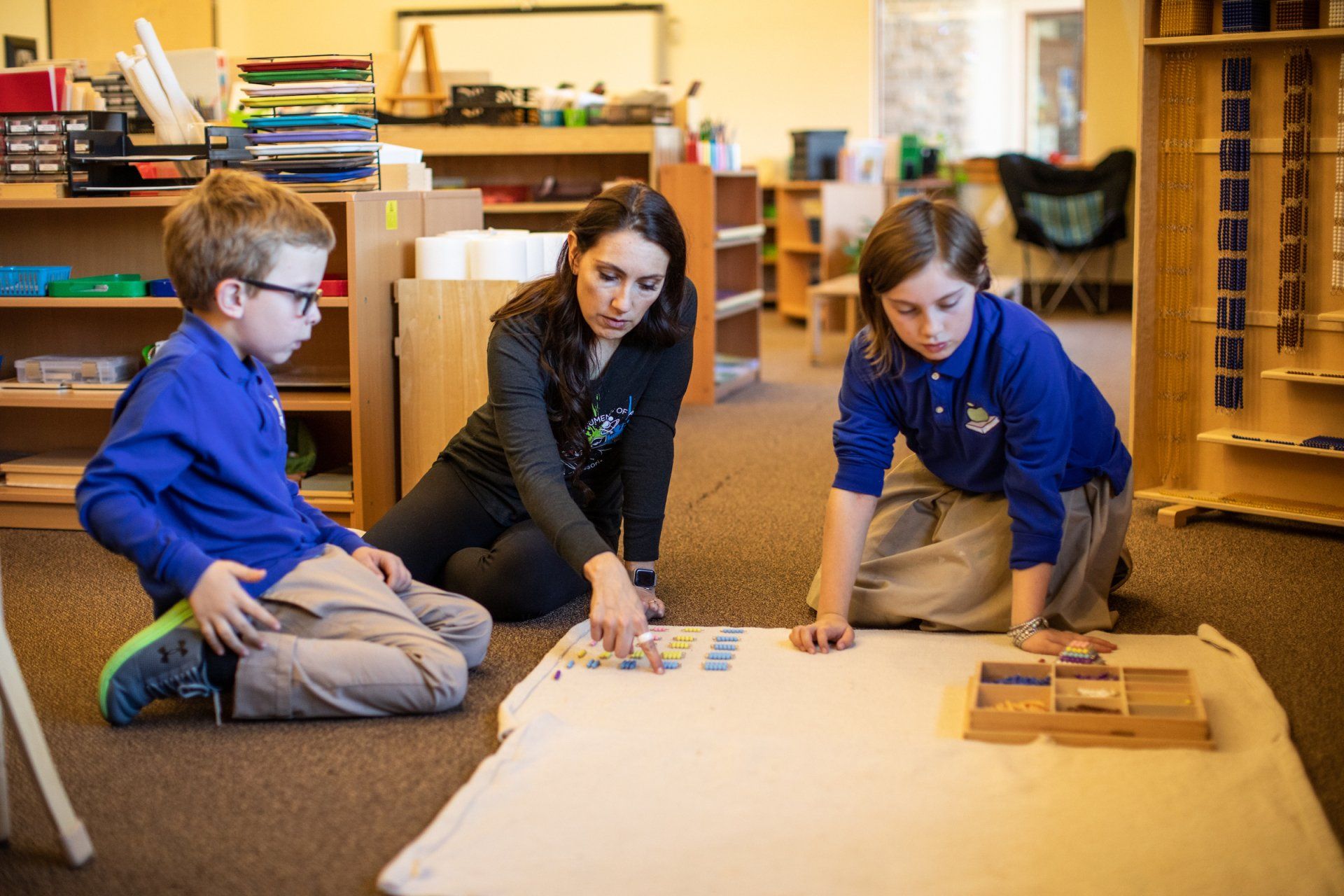
What, exactly, is the role of the Montessori teacher? How is it so different from that of any other teacher?
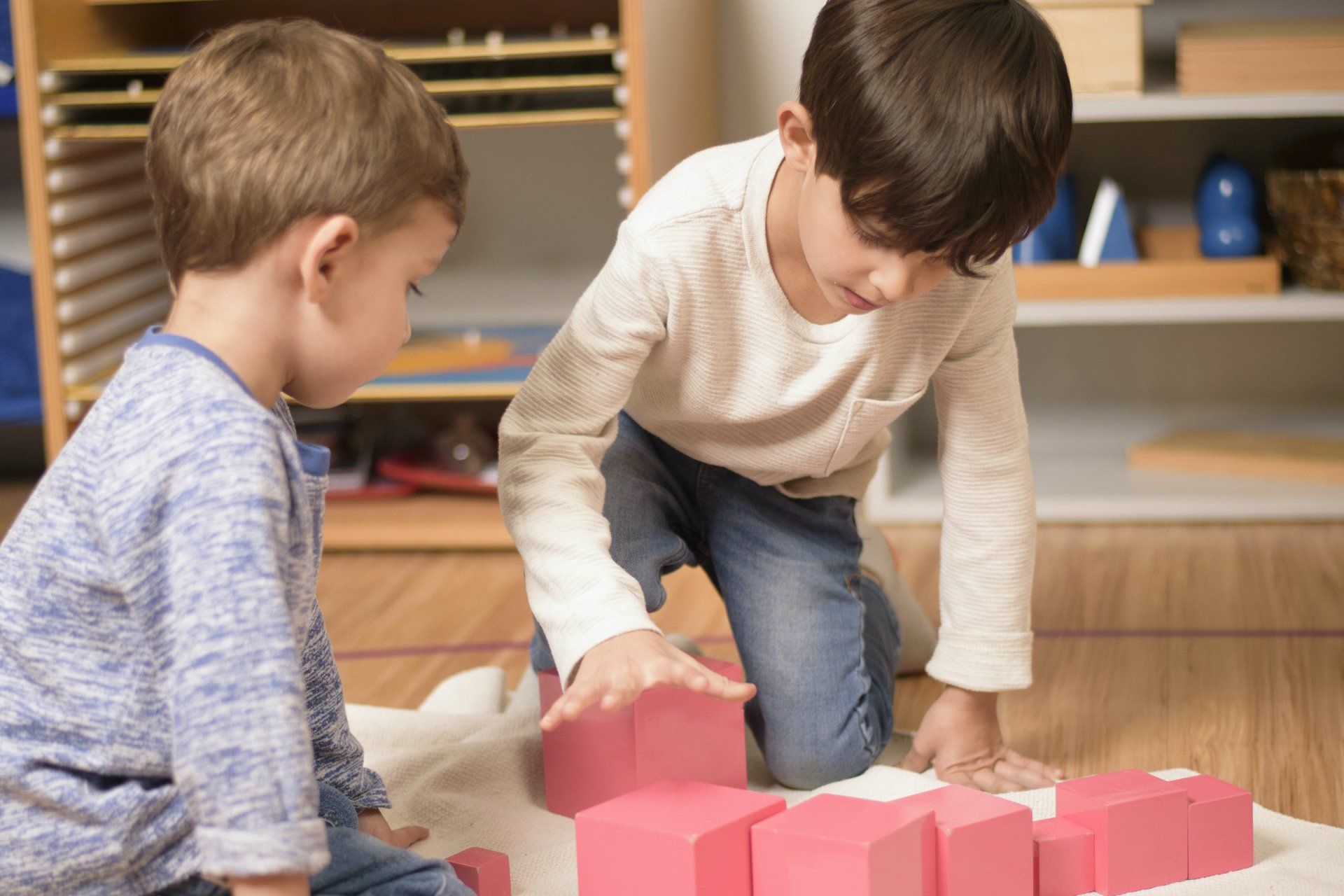
One hallmark of a Montessori education is the use of multi-age classrooms.

Learning about the planes of development isn’t just for Montessori educators. Understanding your child’s development can help at home, too. The First Plane: birth-6 years During this stage children absorb everything like sponges. They are, indeed, excellent examples if what Montessori called ‘The Absorbent Mind.’ This is a time in which we are able to utilize what Montessori called sensitive periods of learning. While each child is different, there are typical patterns that emerge in regards to brain development and general readiness to learn particular skills. During the first three years of this plane, all learning is done outside of the child’s conscious mind. They learn by exploring their senses and interacting with their environment. During the second half of the plane, from about 3-6 years, children enter the conscious stage of learning. They learn by using their hands, and specialized materials in the Montessori classroom were developed with this consideration. During this time, children have a wonderful sense of order. They are methodical and can appreciate the many steps involved in practical life lessons in their classrooms. The organization of the works on their classroom shelves is intentional, which appeals again to this sense of order. The first plane is a time in which children proclaim, “I can do it myself”; it is a time of physical independence. The Second Plane: 6-12 years During the elementary years children begin to look outside themselves. They suddenly develop a strong desire to form peer groups. Previously, during the first plane, a child would be content to focus on their own work while sitting near others. In the second plane, a child is compelled to actually work with their friends. It is during this time that children are ready to learn about collaboration. During the second plane there is a sudden and marked period of physical growth. This may be a contributing factor to the observation that many children of this age seem to lack an awareness of their body, often bumping into things and knocking things over. Children begin to lose their teeth around this time as well. Their sense of order and neatness tend to fade a bit during this plane. Throughout the second plane, children’s imaginations are ignited. Since Montessori education is based in reality, we find ways to deliver real information to children through storytelling and other similar methods. For example, when teaching children about the beginnings of our universe, Montessori schools use what is called a Great Lesson. The first Great Lesson is a dramatic story, told to children with the use of props, experiments, and dramatics (think: a black balloon filled with glitter is popped to illustrate the Big Bang, with bits of paper in a dish of water used while talking about particles gathering together). This lesson is fascinating for children in the way it is presented, but gives them basic information about the solar system, states of matter, and other important concepts. Children in the second plane have a voracious appetite for information, and are often drawn strongly to what we in Montessori call the cultural subjects: science, history, and geography. While we support their rapid language and mathematical growth during this time, we are also responsible for providing them with a variety of rich cultural lessons and experiences. It is important to note that children develop a sense of moral justice at this time. They are very concerned with what is fair, and creating the rules to a new game is often as important (if not more so) than playing the actual game itself. This is the period of time in which children are striving for intellectual independence. The Third Plane: 12-18 The third plane of development encompasses the adolescent years. During the second plane, children become aware of social connections, but in the third plane they are critical. During this time children rely heavily on their relationships with their peers. They feel a strong desire to remain independent from adults, although they are not quite ready to do this entirely. It is our job to find ways that allow them to experiment with independence while also providing a safe structure in which they may do so. Children in the third plane tend to require more sleep, and they sleep later than when they were younger. They long for authentic learning experiences, and Dr. Montessori imagined just that. Her ideas of Erdkinder (children of the earth) led her to contemplate a school setting that would support children’s development during this time. She imagined a farm school, in which children would work to keep the farm operational, but also contribute to planning and decision making while doing so. During the third plane children are refining their moral compass while developing a stronger sense of responsibility. The Fourth Plane: 18-24 The final plane is a time in which young adults are striving for financial independence. They are often living away from home for the first time, and use this time to figure out where they fit into their society. Many make choices to further their education and/or explore career paths. It is during the fourth plane that people begin to develop a truer sense of who they are as individuals. Each plane of development should be mindfully nurtured. If a child is able to experience one developmental phase in a rich and carefully prepared environment, they are ready to fully take on the next phase when it is time.